Guided by operators who have been in your seat.
OpsATC is guided by operators who spent their careers in supply chain, IT, and global operations. Here is who is in the room: the founder building it, and the advisory board shaping the product, the pitch, and the roadmap.
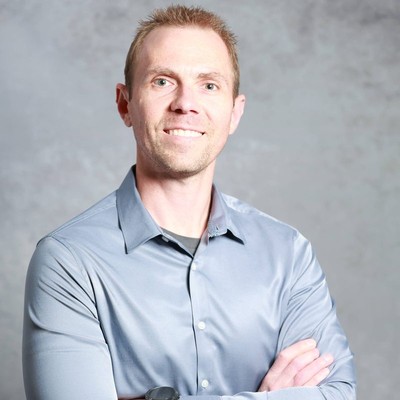
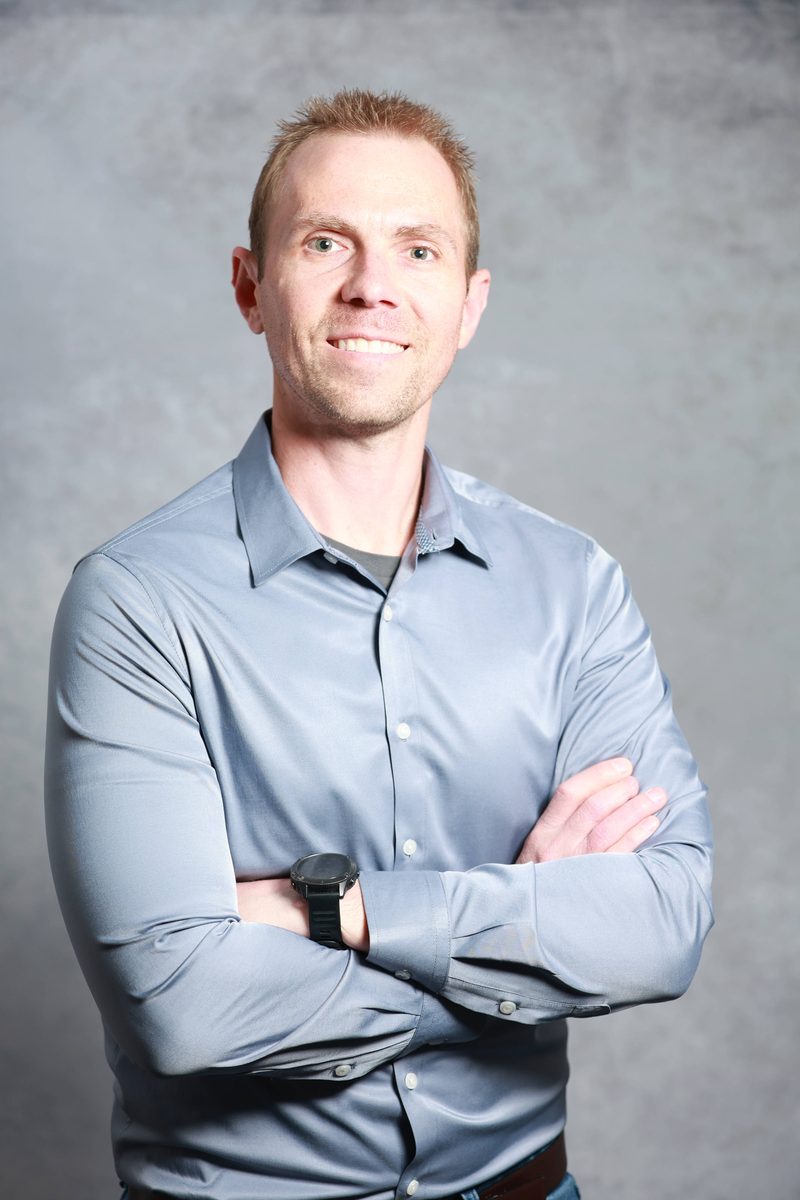
Brian Weisburd
Founder & CEO
Westminster, CO
Two decades leading end-to-end global supply chain operations across technology, healthcare, and distribution, most recently as a senior director at Quantum Corporation. He has built and led teams of 200+ across seven countries, protected $2B+ in quarterly revenue, and delivered tens of millions in cost reduction and inventory savings, founding OpsATC to build the orchestration layer his teams always needed but never had.
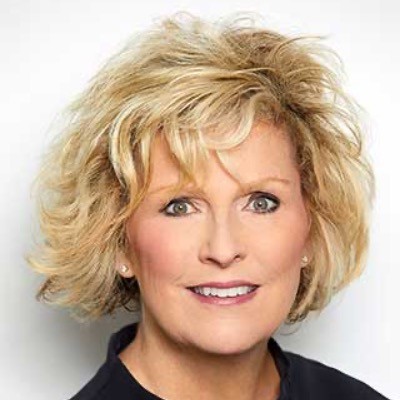
Joan Motsinger
Industry Advisor
Hayward, WI
Joan Motsinger is a former C-suite executive at Seagate Technology and a values-based leader with extensive multinational experience in technology development and operations. Her expertise spans risk management, operational excellence, digital transformation, and corporate responsibility, and she serves as a board member and industry advisor across technology, private equity, and corporate responsibility.
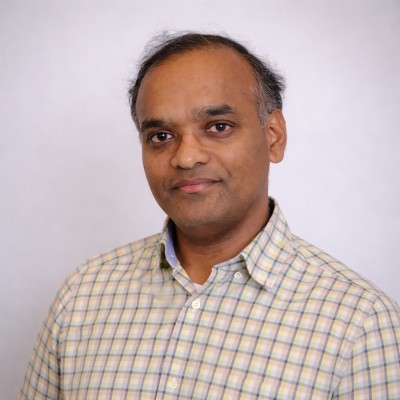
Suresh Sivapuram
Industry Advisor
San Jose, CA
Suresh Sivapuram leads IT supply chain systems at Altera, following nearly three decades architecting the enterprise systems that run supply chain and finance. At Seagate he led the ERP implementations and integrated a string of acquisitions as IT Director, and he later served as Senior Director of Business Technology at Tonal. Across his career he has delivered the ordering, warehouse, and finance systems that keep global operations running, and stood up the offshore teams to support them. He is a certified PMP and Six Sigma practitioner with deep expertise across enterprise systems, supply chain, and finance.
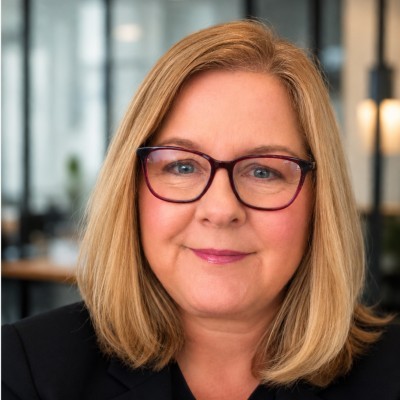
Nicole Enright
Industry Advisor
Mesa, AZ
Nicole Enright brings 30 years of global technology industry experience spanning P&L leadership, strategy, operations, supply chain, M&A, and business transformation. Most recently, she served as President of Avnet Integrated, leading a $1B+ global systems integration business across the Americas, EMEA, and Asia-Pacific. Her career includes leadership through 13 acquisitions and an $11 billion divestiture, giving her a practical operator's perspective on scaling businesses, transforming complex operations, and turning technology into measurable business value.
Read the founder's story
Traditional Operations Ecosystems
are missing a critical connection.
Artificial Intelligence fills the gap.
People, processes, systems, customers, suppliers: the operations ecosystem depends on every one, and today they run as silos with humans clicking between them. I'm building OpsATC.AI™ to be the connective layer holistic operations require. My name is Brian Weisburd, and I started this company to help guide global supply chain operators into the new age of Artificial Intelligence.
Why I built this. For two decades I ran end-to-end global supply chain operations across the technology, healthcare, and distribution industries. I led teams spanning planning, procurement, contract manufacturing, fulfillment, logistics, and service operations. That work coordinated teams across seven countries through complex transitions, driving critical supplier relationships, improved and automated processes, and best-in-class customer experience. I have worked directly with the CEOs, CFOs, and supply chain and IT leaders who own the complex challenges that come with running a global operation. I built OpsATC.AI to support their efforts toward successfully transitioning their companies into the new AI era. I built it as a toolset I wish I had much earlier in my career. Most importantly, I built it as a tribute to the incredible operators I had the privilege of working with over the years. This is for them.
Originally from Miami, I moved to Denver in 2009 for the mountains and the open air, and never looked back. Years later, I'm proud to call myself a Coloradan and continue to enjoy the mountains every chance I get.
- 01 2007-2011 Retail Target · Ross Stores Manager
- 02 2011-2014 Beverage Distribution Beverage Distributors Salesman
- 03 2014-2016 Supply Chain MBA Leeds School · CU-Boulder
- 04 2016-2017 Healthcare Operations Ethos Vet Health Manager
- 05 2017-2018 F&B Procurement UNFI Manager
- 06 2019-2023 Data Storage Seagate Logistics Manager 2019-2020 Program Director 2021-2022 Senior Manager 2022-2023
- 07 2023-2025 Data Storage Quantum Senior Director
My background, in eight chapters.
The conviction.
For two decades I led planning, manufacturing, logistics, and global service teams, and everywhere I went, the story was the same. Data storage, food and beverage, healthcare, retail: different industries, identical pain. The data was there. The systems were there. The people were there. They just weren't connected, and everyone was working with blinders on.
Information only moved as fast as the next human handoff. Problems showed up after they'd already cost something. And improvements never stuck, because every quarter brought a fresh process map and another expensive consulting deck. What operations teams need isn't one more dashboard or one more planning suite. They need a layer that ties the people, the systems, the customers, and the suppliers together so they finally act as one. That layer should be the product, not the afterthought.
Why now?
This turned into an obsession in 2025, the year the technology finally crossed from interesting to genuinely useful for running an operation. Like a lot of operators, I started with the tools already on my desk. They were fine for summarizing an email or cleaning up a spreadsheet. But the further I went, first with ChatGPT and then through real hands-on training with frontier AI models, the more obvious it became that this was going to reach far past email summaries and slide decks. Three things had finally matured enough to make the connective layer I kept wishing for something you could actually build.
Foundation Models
Reasoning at the altitude of a strong analyst, not just at the altitude of a search bar.
Model Context Protocol
Structured, auditable, read-only access to systems of record, instead of scraping screens.
Observability Tooling
Long-running agent reasoning matured to the point where a human can trust an AI to recommend with citations, not just answer trivia.
What I'm building.
OpsATC.AI is a control tower for the people who actually run operations. It sits on top of the systems you already have, your ERP, your WMS, your CRM, and the rest, and makes sense of them together. At the center is an agent named The Captain, built to run on any frontier model, who reads across your systems, works out what's happening, and always shows her sources. She never acts on her own. The operator makes every call, every time. There's no autopilot in the settings because there's no autopilot in the code.
I'm building it deliberately small: a small team, close relationships with the customers we work with, and a roadmap shaped by the operators who join us as design partners rather than by a fundraising calendar. The goal was never to cut headcount. It's to take the people you already have and connect them straight to the operation they already run.

The breadth is the point.
I've spent two decades in operations, and I never stayed in one lane. My first job out of college was running the back of the house at Target and Ross. From there I sold for a beverage distributor, then went back to school for an MBA in Supply Chain at CU-Boulder's Leeds School of Business.
After grad school I ran the national healthcare supply chain for Ethos and food procurement for Whole Foods' private label across nineteen UNFI distribution centers. That led to the longest chapter of all: seven years in data storage, first at Seagate and then as a senior director at Quantum, running global operations across fulfillment, contract manufacturing, hub operations, and service and repair.
Different companies, different industries, different roles, and different teams around the world all encountered the same broken connection every single time, whether they sold groceries, hard drives, or veterinary hospital supplies. This pattern of issues doesn't care what you make, and neither does the solution. The conviction behind OpsATC.AI isn't a theory. It's what remains after I encountered every side of this problem over the course of my career.
How a first conversation actually works.
It's free, it's thirty minutes, and it's me on the other end, not a salesperson and not a sequence. It's a straightforward conversation about your operation: how your team is using AI today, how you see it fitting into the way you run things going forward, and the problems you're facing right now that you think OpsATC.AI might help you solve.
If there's a fit, we'll talk through what working together as a design partner could look like against your real operation. No deck, no pressure, no follow-up sequence. Just an honest conversation about whether there's something here worth building together.
What I'm not.
I don't believe replacing good people with AI is a win, and I'm not going to pretend this new era doesn't carry real risks. What I am is a builder who cares about supporting strong teams, fixing messy processes, and running operations well. When you partner with OpsATC.AI, you're working directly with me: the founder, the builder, and someone who has actually sat in your seat.
I built this for the operators I've worked alongside over the years. They're the reason it exists, and they're who I want to do right by as it grows.
The Founder
Sets the vision. Makes every call about who, what, when. Not delegating that work.
The Builder
In the platform, on the architecture, shipping the work. Hands on the keyboard.
The Operator
Two decades inside operations. Has been in your seat. Speaks your language.
You read this far. Bring me the worst exception of your quarter.
Bring an operational problem. Let's talk it through. No deck, no salesperson, no follow-up sequence.